

God's Word Everyday
for Everyone‍

Testimonials
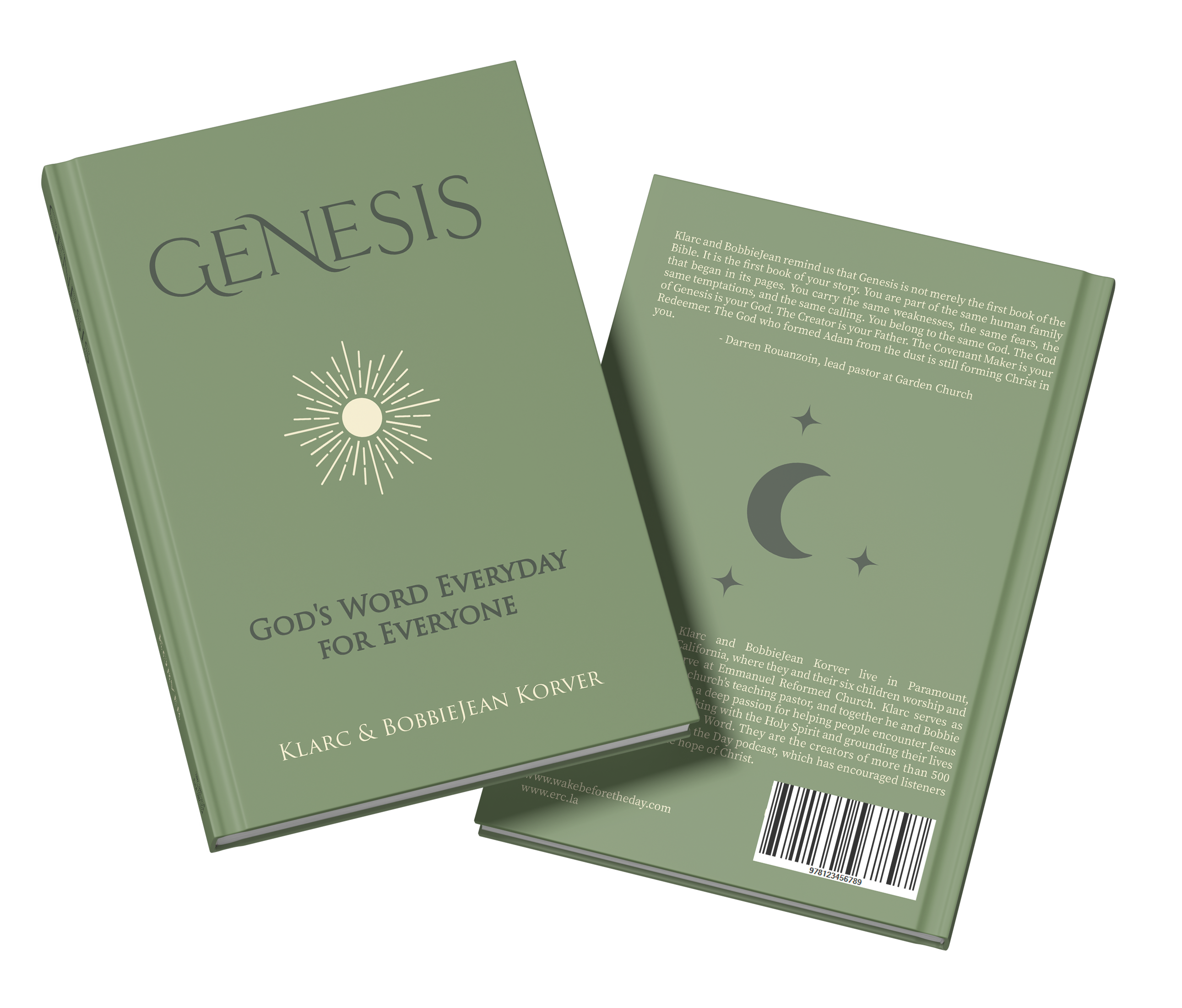
Klarc and BobbieJean remind us that Genesis is not merely the first book of the Bible. It is the first book of your story. You are part of the same human family that began in its pages. The God who formed Adam from the dust is still forming Christ in you
Darren Rouanzoin, lead pastor at Garden Church
Our Creator God, Father, Son and Holy Spirit reveals Himself all through the pages of Genesis.  Klarc and BobbieJean have done a beautiful job helping us encounter this great God historically, theologically, and personally.  If you want to meet Jesus in fresh new ways, this book will help you experience the living Word of God as you read the written Word of God.  
- Rev. Dr. Kevin G. Harney, Co-Founder of Organic Outreach International and Co-Author of the Organic Outreach quintet of books.
Kindle adaptable

Also available on kindle

this book distills timeless lessons from the Book of Genesis into clear, practical insights for modern life.

Previous
Next
Kindle adaptable

Get the Study Journal

We created the Genesis Study Journal to help you move from “I read it” to “I actually engaged with it and met the Lord.” Whether you’re going through this on your own, with a friend, or in a group, this journal is meant to give shape to your reflection—not replace your Bible, but help you sit with it longer.

Wake Before the Day

Podcast & Blog

Inviting the Holy Spirit to encourage and empower us each day through the reading, writing, praying, and sharing of Scripture.

About the author

Klarc & BobbieJean

Klarc and BobbieJean Korver live in Paramount, California, where they and their six children worship and serve at Emmanuel Reformed Church. Klarc serves as the church’s teaching pastor, and together he and Bobbie share a deep passion for helping people encounter Jesus by walking with the Holy Spirit and grounding their lives in God’s Word.

As the creators of more than 500 episodes of the Wake Before the Day podcast, the authors have encouraged listeners around the world with the hope of Christ.

FAQ Overview

Common Questions

What is the book of Genesis about?

Genesis is the story of beginnings—but even more, it’s our introduction to God. It introduces us to the God who speaks, forms, blesses, and pursues. Here we see creation, the fracture of sin, and the first threads of redemption that will run all the way to Jesus (Genesis 1:1; Genesis 3:15). Genesis is foundation-soil: everything later in Scripture grows from what’s planted here (Genesis 50:20).

Who wrote Genesis?

Genesis does not name its human author directly. Traditionally, God’s people have understood the books of the Law to be connected to Moses’ leadership and teaching (Exodus 24:4; Deuteronomy 31:24). However you land on the “how,” the “who” behind Scripture is clear: God is revealing Himself through His Word (2 Timothy 3:16). Genesis reads like God introducing Himself to a people who desperately need to know Him (Genesis 1:1).

Does Genesis talk about Jesus or is He only in the New Testament?

Genesis points to the coming of Jesus by showing us, from the very beginning, that God’s response to human sin is not abandonment but redemption (Genesis 3:15). The promise to Abraham that all nations would be blessed through his offspring begins a lineage that ultimately leads to Christ, the true Seed of promise (Genesis 12:3; Galatians 3:16). Throughout Genesis, flawed people are preserved by grace, teaching us that salvation has always depended on God’s faithfulness rather than human perfection (Genesis 15:6). Stories like the ark, the ram provided in Isaac’s place, and Joseph’s suffering-for-salvation pattern all foreshadow a greater rescue yet to come (Genesis 22:13; Genesis 50:20). By the time Genesis ends, we are left longing for a King who will finally crush the serpent, heal what sin has broken, and bring God’s presence fully among His people (Genesis 3:15).

What does “Genesis” mean?

“Genesis” means “beginning,” and the title fits. Everything starts here: creation, covenant, and the storyline of salvation (Genesis 1:1; Genesis 12:1–3). Genesis is not mainly about defending God—it’s about revealing God. When the Bible opens, it begins with God, not us (Genesis 1:1).

Is Genesis 1 meant to be science?

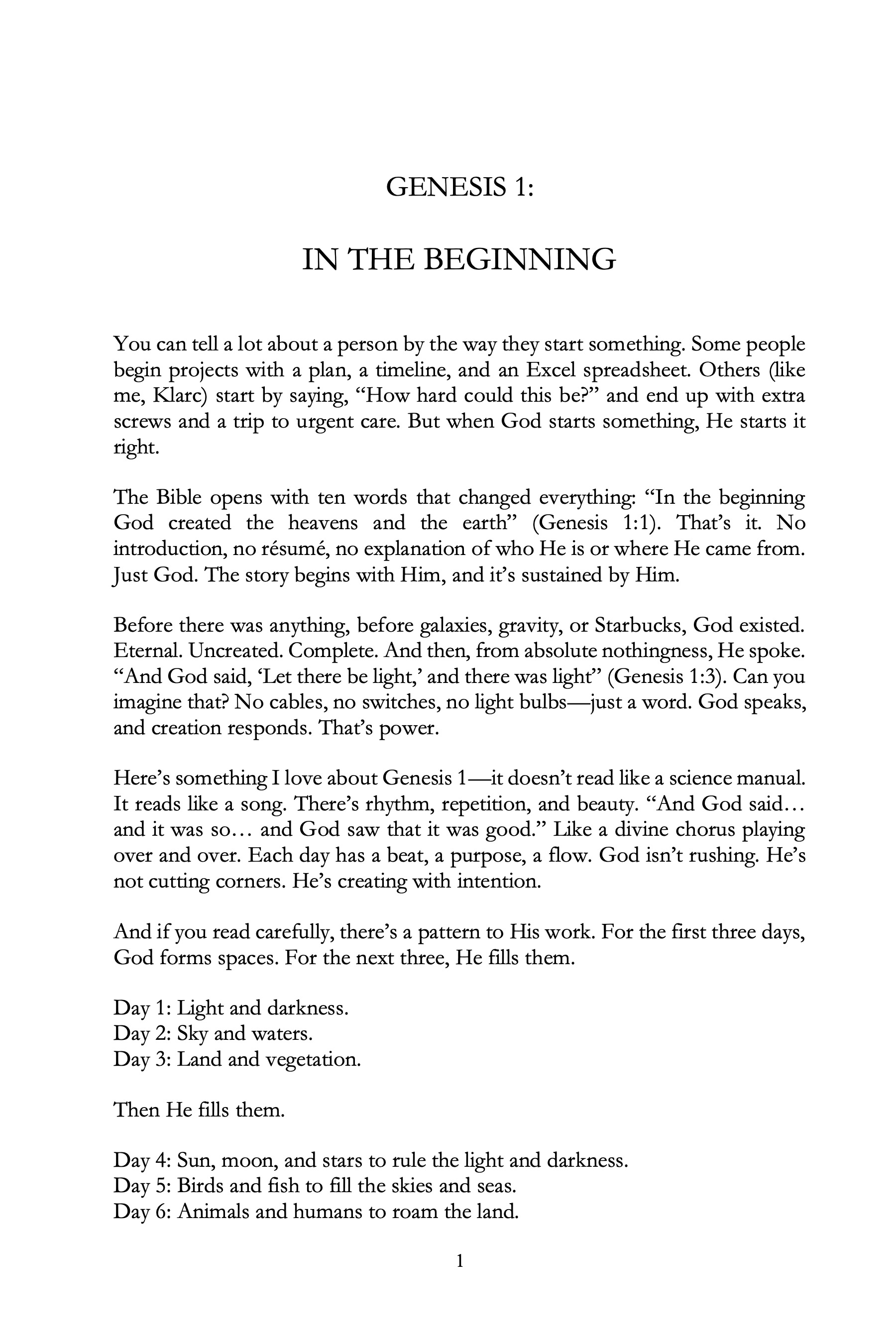
Genesis 1 reads like a worshipful poem—a proclamation of God bringing order out of chaos and calling creation good (Genesis 1:1–4, 31). It tells us what matters most: the world is not an accident, and you are not either (Genesis 1:26–27). The chapter is shaping our faith and our identity before it ever addresses our debates.

Are Genesis 1 and Genesis 2 different creation stories?

Genesis 1 is the wide-angle lens—cosmic scale, God speaking the universe into being (Genesis 1:1–3). Genesis 2 zooms in—intimacy, God forming humanity by hand and breathing life into dust (Genesis 2:7). It’s not a contradiction; it’s the same masterpiece shown from two angles similar to the synoptic gospels.

What does it mean to be made in the image of God?

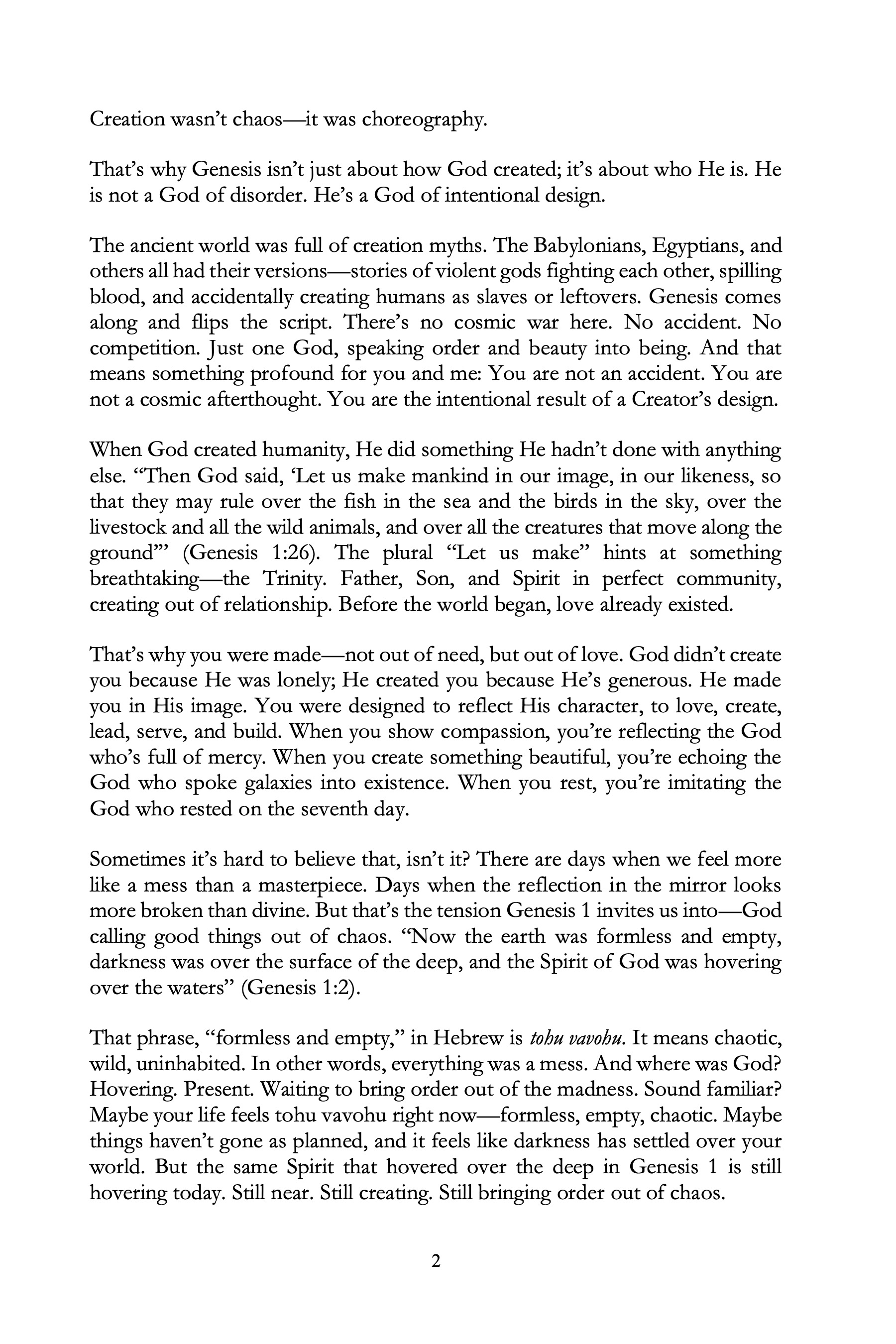
Being made in the image of God means we are not God, but we were created in His likeness—as His reflection in the world (Genesis 1:26–27). Scripture teaches that human beings are meant to represent God, carrying His character into creation through how we love, create, and steward what He has made. The New Testament uses the word eikon, meaning image, likeness, statue, or representation, reminding us that we are living signposts pointing beyond ourselves (James 3:9). This truth gives every human life unshakable dignity and calls us to see God’s image not only in ourselves, but also in the person standing in front of us.

What happened in the Garden of Eden?

The serpent’s strategy was simple: turn God’s Word into a question—“Did God really say?” (Genesis 3:1). Sin broke trust, and shame followed (Genesis 3:7–10). Yet God still walked into the garden asking, “Where are you?”—moving toward His people even in their failure (Genesis 3:9).

What is the significance of Genesis 3:15?

Genesis 3:15 is the first gospel promise. The serpent will strike, but the coming Seed will ultimately crush the serpent (Genesis 3:15). Redemption was not God’s backup plan—it was God’s plan to send Jesus as the unblemished lamb before the creation of the world (1 Peter 1:18-20).

Why did God reject Cain’s offering?

The issue was not the offering itself, but the heart behind it (Genesis 4:3–7). God warned Cain that sin was crouching at his door and invited him to choose rightly (Genesis 4:7). Worship is not performance; it is trust.

Where did Cain get his wife?

Genesis does not give every detail modern readers often want (Genesis 4:17). Instead, it shows the spread of humanity and the persistence of God’s mercy despite sin. Scripture often redirects curiosity toward what shapes the heart.

What is the mark of Cain?

The mark was an act of protection—God limiting violence rather than excusing sin (Genesis 4:13–15). Grace does not remove consequences, but it does restrain destruction. Even here, God’s mercy is visible.

Who were the Nephilim in Genesis 6?

Some say they were fallen angels—spiritual beings who broke heaven’s boundaries and corrupted humanity. Others believe they were the godly descendants of Seth intermarrying with the wicked descendants of Cain—a picture of compromise, of faith blending with rebellion. Still others argue they were ancient kings who took women by force, abusing power and twisting marriage into tyranny.

Each view has its own intrigue (and theological rabbit trails), but the main point doesn’t depend on which one you pick. However it happened, humanity crossed a line. Wickedness wasn’t just spreading, it was multiplying. Boundaries between heaven and earth, good and evil, justice and cruelty all blurred. The world was unraveling.

Did the flood cover the whole earth?

Christians differ on how to understand the flood’s scope, but Genesis presents it as a decisive judgment on a corrupt world (Genesis 6:5–13). What is unmistakable is that grace preserved Noah (Genesis 6:8). God remembered Noah in the storm (Genesis 8:1). It is fascinating that marine fossils are found on the top of our highest mountains. It is also speculated that petrified wood has been found on Mt. Ararat that could be Noah’s ark. Is it? We cannot know for sure but it is amazing that as time passes and science improves, it only seems to confirm what the Bible has said for thousands of years!

What does it mean that God remembered Noah?

“Remembered” does not imply forgetfulness. It means God acted faithfully on His covenant promise (Genesis 8:1). When God remembers, He moves to rescue.

What does the rainbow mean?

The rainbow is a covenant sign reminding us that God is faithful to His promises (Genesis 9:12–17). It declares mercy after judgment and reminds us of His promise to never flood the earth with water again. God binds Himself to His word.

Why did God confuse the languages at Babel?

Babel represents humanity seeking identity apart from God (Genesis 11:4). God’s intervention restrained pride and preserved His redemptive plan (Genesis 11:6–8). This helps us make sense of the many languages found around the world.

Why did God choose Abraham?

God called Abraham by grace, not merit (Genesis 12:1–3). Through him, God promised blessing for all nations. The story highlights God’s faithfulness more than Abraham’s greatness.

Why did God ask Abraham to sacrifice Isaac?

Genesis says God tested Abraham’s trust (Genesis 22:1). God provided the sacrifice and reaffirmed His promise (Genesis 22:13–14). The story points forward to God’s ultimate provision (Romans 8:32).

Who is the angel of the Lord?

In Scripture, the Angel of the Lord speaks and acts with God’s own authority—swearing by Himself, forgiving sins, judging evil, and receiving worship—yet He is also distinguished from the Lord, revealing personal distinction within the Trinity (Genesis 16:10; Genesis 22:15–16; Judges 6:20–24). He possesses divine attributes, knowing hearts and futures, and is repeatedly identified as God by those who encounter Him, including Hagar, who calls Him “the God who sees” (Genesis 16:13). At key moments, the text speaks of the Angel of the Lord and the Lord interchangeably, even having the Angel explicitly identify Himself as God (Genesis 22:12, 15–16; Genesis 31:11–13). As David Murray explains in Jesus on Every Page, these appearances point to the pre-incarnate Christ—God drawing near to His people before Bethlehem.

Why did Jacob wrestle with God?

Jacob’s wrestling led to transformation and a new identity (Genesis 32:24–28). He walked away limping, but blessed. Grace met him in the struggle.

What does Genesis 50:20 mean?

Joseph declares that God can redeem what humans intend for harm (Genesis 50:20). Evil is not called good, but God’s sovereignty brings redemption. This verse captures the gospel pattern embedded in Genesis.

Why did God allow polygamy?

While Scripture records polygamy, it never presents it as God’s ideal; from the beginning, God designed marriage as one man and one woman becoming one flesh (Genesis 2:24). In a broken, patriarchal world, God permitted polygamy not as approval but as accommodation—often to protect and provide for women who would otherwise face poverty, slavery, or exploitation (Genesis 4:19). Again and again, the Bible shows that polygamy brought division, jealousy, and spiritual compromise, never peace (1 Kings 11:3–4). In Christ, God restores marriage to its original design, pointing us back to faithful, covenantal oneness that reflects His heart (Matthew 19:4–6).